Understanding Your Surgery
Before your scheduled procedure, it's crucial to understand:
- Why you need the surgery
- What the procedure involves
- Expected outcomes and recovery time
- Potential risks and complications
- Alternative treatment options
Pre-Operative Preparations
2-4 Weeks Before Surgery
Medical preparations:
- Complete all required pre-operative tests (blood work, ECG, X-rays)
- Inform your surgeon about all medications and supplements
- Disclose any allergies or previous reactions to anesthesia
- Get medical clearance if you have chronic conditions
Lifestyle adjustments:
- Quit smoking (at least 4 weeks before)
- Limit alcohol consumption
- Start eating a balanced, nutritious diet
- Begin light exercise if approved by your doctor
1 Week Before Surgery
- Arrange transportation home after surgery
- Prepare your recovery space at home
- Stock up on post-surgery supplies
- Fill prescriptions for pain medication
- Arrange for help during recovery period
24 Hours Before Surgery
Do:
- Shower with antibacterial soap
- Remove nail polish and jewelry
- Pack a hospital bag (ID, insurance card, comfortable clothes)
- Follow fasting instructions carefully
Don't:
- Eat or drink after midnight (or as instructed)
- Take certain medications (check with your surgeon)
- Apply lotions, creams, or makeup
- Bring valuables to the hospital
Day of Surgery
What to Expect:
- Check-in and registration (arrive 2 hours early)
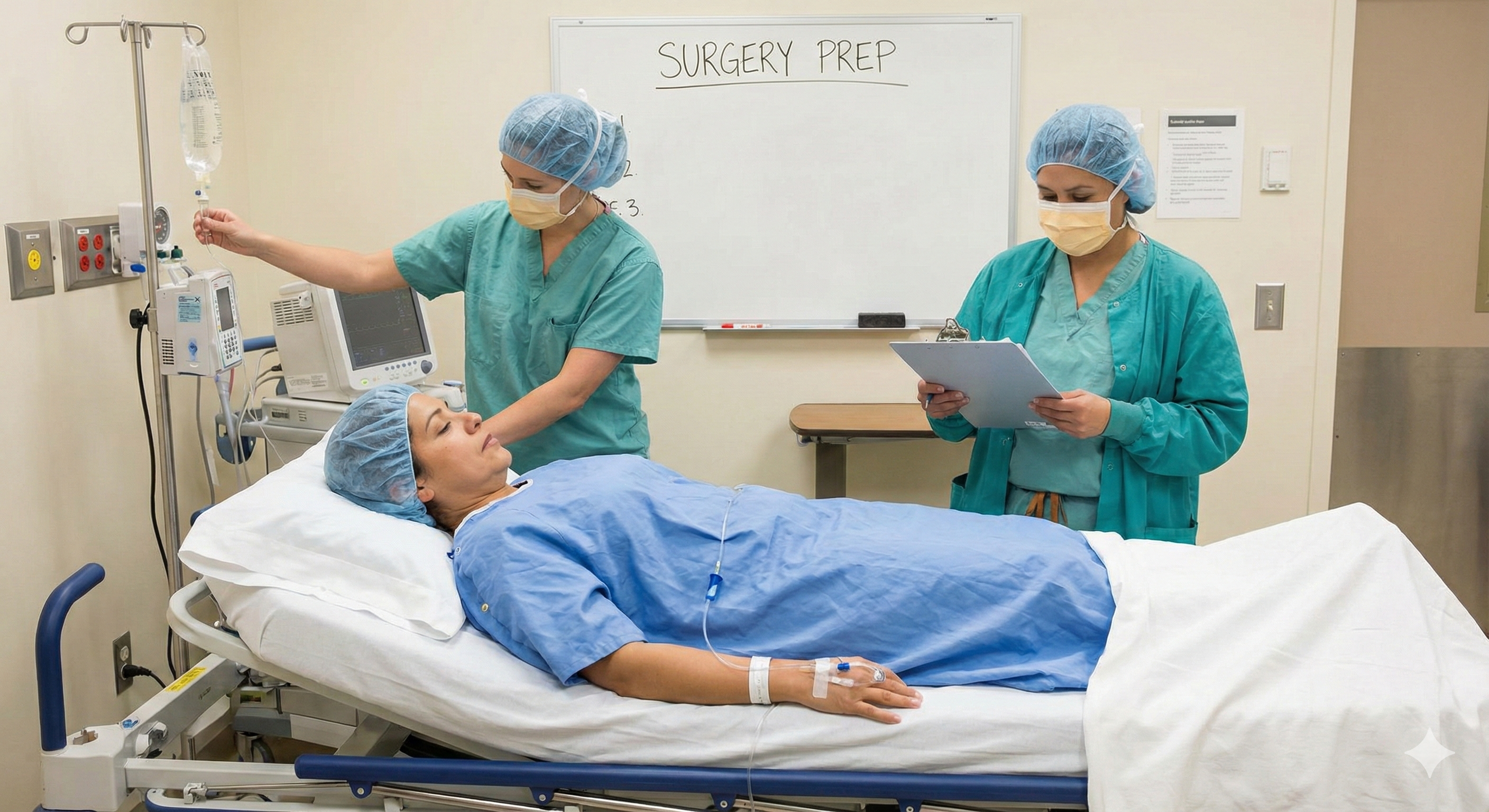
- Pre-operative preparation:
- Change into hospital gown
- Vital signs monitoring
- IV line placement
- Meet with anesthesiologist and surgical team
- Surgical procedure
- Recovery room (1-2 hours)
- Transfer to room (for inpatient procedures) or discharge (for outpatient)
Post-Surgery Recovery
First 24-48 Hours:
- Manage pain with prescribed medication
- Follow wound care instructions carefully
- Get plenty of rest
- Stay hydrated
- Eat light, easy-to-digest foods
- Avoid heavy lifting or strenuous activity
Warning Signs - Call Your Doctor If:
- Fever above 101°F (38.3°C)
- Excessive bleeding or discharge from incision
- Increasing pain not relieved by medication
- Redness, swelling, or warmth around incision
- Difficulty breathing or chest pain
- Persistent nausea or vomiting
Long-Term Recovery Tips
Week 1-2:
- Follow all activity restrictions
- Attend follow-up appointments
- Keep surgical site clean and dry
- Gradually increase activity as approved
Week 3-6:
- Continue wound care
- Start light exercise (walking)
- Resume normal diet
- Monitor for any complications
Frequently Asked Questions
Q: When can I return to work? A: This depends on your type of surgery and job requirements. Discuss with your surgeon during follow-up.
Q: Can I drive after surgery? A: Not while taking narcotic pain medication. Usually safe after 1-2 weeks for minor procedures.
Q: When should I schedule my follow-up? A: Typically 1-2 weeks post-surgery, but your surgeon will provide specific instructions.
Our Commitment to Your Safety
At Ayushman Hospital, we maintain the highest surgical standards:
- State-of-the-art operating theaters
- Experienced surgical teams
- Advanced anesthesia monitoring
- Comprehensive pre and post-operative care
- 24/7 emergency support
Have questions about your upcoming surgery? Contact our surgical department at +91-96195 81021.
Download our complete Surgery Preparation Checklist at the front desk or request it during your pre-operative appointment.